China Extended Study Trip

Books are windows to the world; the ability to step into and explore the pages of those books is an adventure. For the past several weeks Ally has had her nose buried in textbooks studying the rise and fall of the great Chinese dynasties. Her eyes connected words and sentences that took her into the mind of the powerful First Emperor, on a journey across the Silk Road, and through the revolution that created and shaped the Republic of China. Today, she and many of the other MZS middle-school students are on their way to China to see those facts and stories come to life.

The students will spend a week immersing themselves in China’s dynamic history and rich culture. They will travel by plane, bullet train, shuttle bus, and rickshaw to see its national treasures, which include the Great Wall, the Terracotta Soldiers, the Forbidden City, and the Temple of Heaven. Aside from site-seeing, they will have many opportunities to engage in hands-on activities. They will take a martial arts lesson from a tai-chi master, bike along Xi’an’s city wall, and visit a pottery factory to make their own terracotta soldier. They will attend a local school to engage in academic and athletic activities with Chinese students, and shop at a local market to buy fresh ingredients before going to a familial courtyard home to learn the time-honored tradition of dumpling making. And, if time allows, they will walk through Beijing’s popular Dong Hua Men night market to test their haggling skills and indulge in its unique and unforgettable gastronomy (spiders, snake, scorpions, silkworms, and centipede on sticks).

Confucius, China’s most notable and distinguished philosopher, understood and validated the idea of cementing knowledge by seeing and doing. He said, “I hear and I forget. I see and I remember. I do and I understand.” This trip will give Ally and her friends a heightened and more enriched understanding of Ancient China, and memories that will last them a lifetime. Perjalanan aman, Ally!

20151127_055219-2

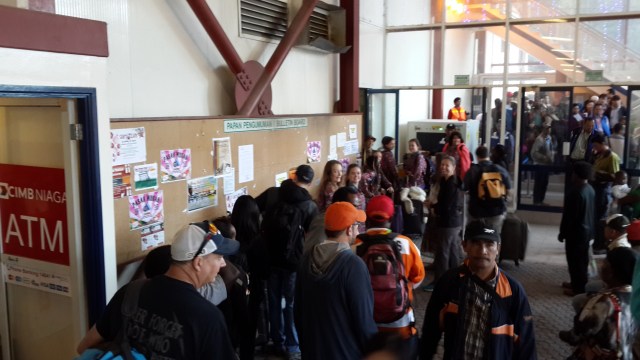
Ally (standing against the bulletin board) is waiting outside Family Shopping to check-in for transportation to the airport in the lowlands.

20151127_055053

The group arrived in Bali earlier this afternoon. They will take a red-eye flight to Beijing tonight, and continue on to Xi’an tomorrow morning. Once they land, they will be off and running for a full day of scheduled activities. Note: all of the students and teachers are wearing brand new Papuan batik shirts, specifically designed and made for school field trips and special events.


Posted in Ally Rose, MZIS, PTFI, Tembagapura, Uncategorized, Vacation | Tagged , , , , , , , , , , , | 2 Comments

Lost in Translation – Part IV

The Tembagapura department store is ready for the holidays. Artificial Christmas trees with flickering lights and kitschy wooden ornaments are up, and the shelves are amply stocked with children’s toys and games. Amusingly marked by things lost in translation, many of these “Made in China” play sets will be wrapped in lavish wrapping paper (as seen in Lost in Translation III) and adorned with oversized bows and trailing ribbon before they are delivered to little children of Tembagapura during the wee hours of Christmas Eve.

IMG_7171

I wonder how the “self loading” feature works on this “Mini Shopping Car.”

B

I’m not sure what is “Funny” about this royal play set.

IMG_7176

“It will string along with you have a pleasure childhood” and “Beauty divas dress up it.” I can’t even begin to understand what these statements are intended to mean.

IMG_7169

We’ve seen a few kangaroos during our travels through Australia, but never a lime green one. It looks like someone forgot to do his/her research on kangaroos.

Posted in Christmas, Funny, Uncategorized | Tagged , , , , | Leave a comment

October Break

Imaginings of timeworn cities that preserve some of the world’s most revered antiquities lured us to Europe. Each country, with its own unique cultural flair and historical relevance, drew us in. One thing was for sure, no matter where we went or what we did, we were sure to have an extraordinary experience.

After some careful thought and consideration, we decided to capture the essence of the Mediterranean. And what better way to do that than on a cruise. Our seven-day itinerary took us through the beautiful Adriatic, Ionian, and Aegean seas to some of the region’s most compelling destinations in Italy, Croatia, Turkey and Greece.

Venice, Italy
Our point of embarkment was Venice, a city that captures hearts with its old-world charm. Each one of the city’s 118 islands (comparable to the size of a city block) is separated by tight canals and linked by foot bridges. We spent two days walking through the maze-like city to see its iconic sights and experience its dreamlike vibe.

We walked through Piazza San Marco and saw St Mark’s Basilica, Doge’s Palace, and the Clock Tower. Shopped in souvenir stores and boutiques. Rode in a gondola. And, imagined ourselves standing next to Marco Polo as he visualized his voyage to China from the Grand Canal.

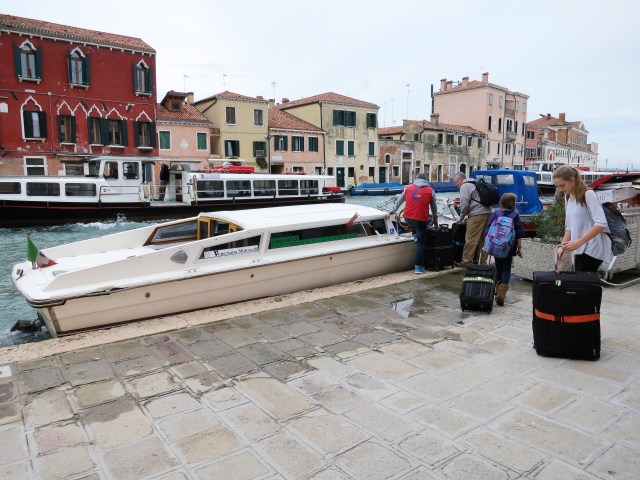
When we arrived in Italy, we took the Alilaguna (a water shuttle) from the mainland airport in Mestre to Venice.

When we arrived in Italy, we took the water shuttle from the mainland airport into Venice.
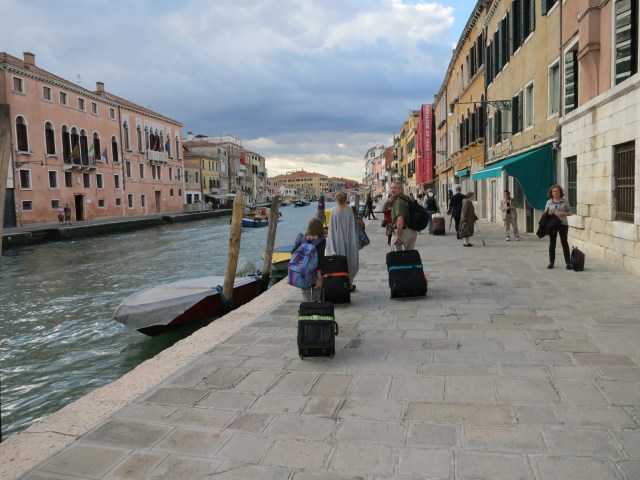
After getting off the shuttle, we had to walk up the canal for a few minutes before arriving at our hotel.

Our hotel was a short three minute walk up the canal from the shuttle’s drop-off station, which worked out very well because the only two means of transportation in Venice are by foot or by boat. Even Venice’s police, fire, and garbage departments are serviced by boats.

Desc

Classic Venice along the Grand Canal.

Descr

Two gondoliers waiting to take someone for a ride.

im

We took a  gondola ride through Venice’s quiet canals. Contrary to popular belief, the gondoliers don’t sing. Instead, they have passing conversations with other gondoliers. We could only imagine what they were talking about. Maybe they were catching up on the news, discussing the latest soccer match, or telling off-colored jokes. We had no idea, but just listening to them begin new conversations, and carry on old conversations, was entertaining enough.

Desc

Piazza San Marco is the largest public square in Venice. Home to St Mark’s Basilica, St Mark’s Campanile, Doge’s Palace, and the Bell Tower, it is the city’s social, political and religious center.

Desc

The girls escaping the crowds for a quick picture in the middle of the piazza.

desc

Kylee and me standing on one of Venice’s 177 foot bridges.

de

Pizza for two!

On our last day in Venice, this water taxi picked us up at our hotel and took us to the cruise ship terminal.

On our last day in Venice, this water taxi picked us up right in front of our hotel and took us to the cruise ship terminal.

desc

It was a really cold day the day we left, but Chris and Ally couldn’t resist standing on the deck of the taxi to see the views and take more pictures.

im

A picture of St Mark’s Basilica (the building with the domed roofs), St.Mark’s Campanile (the waterfront building on the left), the Bell Tower (the tall green-roofed building in the back), and Doge’s Palace (the waterfront building on the right) was taken from the top deck of the cruise ship.

Dubrovnik, Croatia
Dubrovnik, known as “The Pearl of the Adriatic Sea”, took us by surprise! It’s an enthralling city that has been shaped by war. For centuries, the seafaring port (first inhabited in the 7th century) ruled itself as the strong, progressive, and prosperous Republic of Ragusa. A massive city wall was built around the entire perimeter of the old city to protect its vulnerability from empires. The walls were fortified even more with a tower or fort at each corner. The Republic fell to Napoleon’s troops in the early 1800’s, ultimately forcing it to join Croatia. Bullets continued to riddle the city during the 1800’s, 1900’s, and, most recently, 1991 when it came under siege by the Yugoslav People’s Army.

Old Town Dubrovnik’s charm is timeless. It’s a life-sized tapestry of red roofs and cobblestone streets, strikingly studded with forts, castles, and cathedrals. Every step and every glance offers a new opportunity to step back in time.

des

We took the cable car to the top of Mt. Srd to capture the spectacular views of the Old Town and the Adriatic Sea below.

des

Instead of returning to the city on the cable car, we chose to take the hiking path down, which offered more spectacular views of the Old Town and led us through a thick forest of fragrant oaks and pines.

im

Ally and Kylee sitting in front of Minceta Tower. It is the highest tower belonging to Dubrovnik’s ancient defense system. It stands commandingly above the Old Town, and, to many, it represents the town’s strength and unconquerability.

im

Dubrovnik’s distinguishing red roofs. Many of the roofs had to be replaced after it was attacked and shelled in 1991.  Minceta Tower can be seen on the top right, and parts of the wall can be seen running down the left and right sides of the tower.

Expla

Old Town Dubrovnik has become the official location for Kings Landing, a setting from HBO’s Game of Thrones series. This picture was taken while we were walking along the city wall.
im

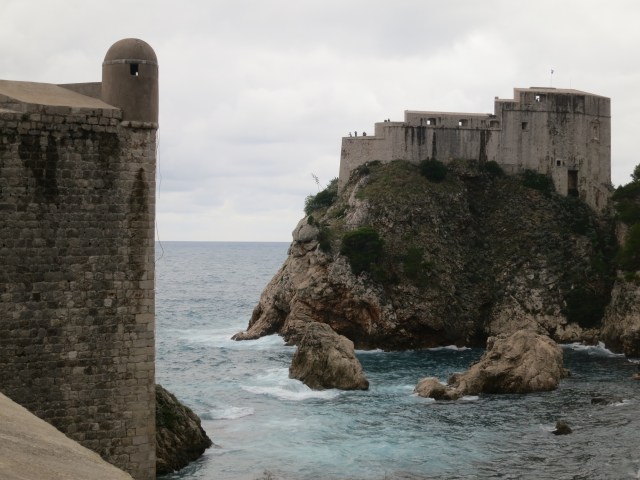
Fort Lovijenac (the building on the right), often referred to as Dubrovnik’s Gibraltar, is another part of Dubrovnik’s ancient defense system. The Venetians tried to build a fort on the same spot, but they were delayed by having to ship building materials in. If the Venetians had succeeded, they would have most likely kept control of Dubrovnik.

Kusadasi, Turkey
The city of Kusadasi protects and embraces the historical remains of Ephesus, an ancient city that was built by the Ionians in 11th century B.C., ruled by the Romans in 129B.C., and later conquered by Alexander the Great. The magnificent ruins of the Library of Celsus dominates today’s earthquake-stricken city. Standing in its shadows are the ruins of the Temple of Hadrian, the Fountain of Trajan, the Temple of Artimis, and the House of Virgin Mary. Ephesus is one of Turkey’s most prized possessions.
de

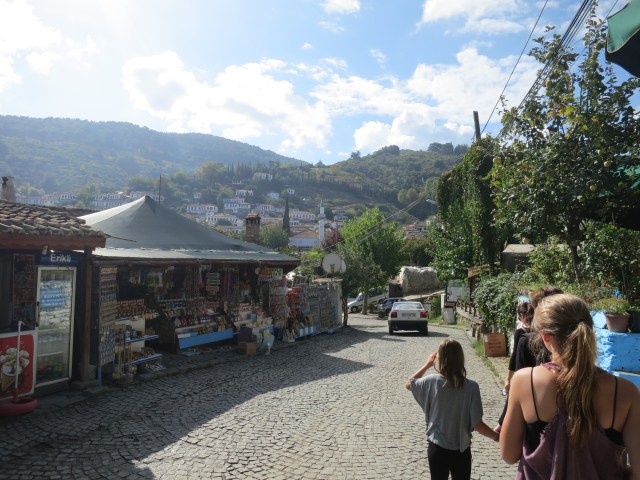
Sirince, a small village perched above Ephesus, allows visitors to see and  explore rural Turkish life.

de

Chris bought a cup of Turkish coffee from a local cafe. The coffee (served cowboy style) was brewed in a small vessel that was partially submerged in fine, hot sand.  The sand was heated in a large copper bowl with a wood fire that burned below it.
c

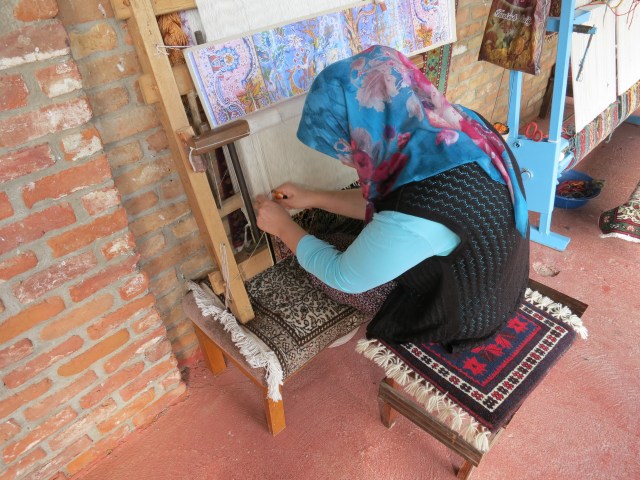
A local artisan weaving an intricate silk rug.

de

The city’s marble-paved road, lined by hallowed out shops and shattered baths, leads tourists down the hill to the Celsus Library, which can be seen in the background.

des

The remains of a city that once bustled with commerce, religion, education, and art.

de

A street scene taken from Ephesus’s main street.

de

The Temple of Hadiran is regarded as one of the most famous monuments of Ephesus. The curved arch bears a relief of Tyche, the goddess of victory.
des

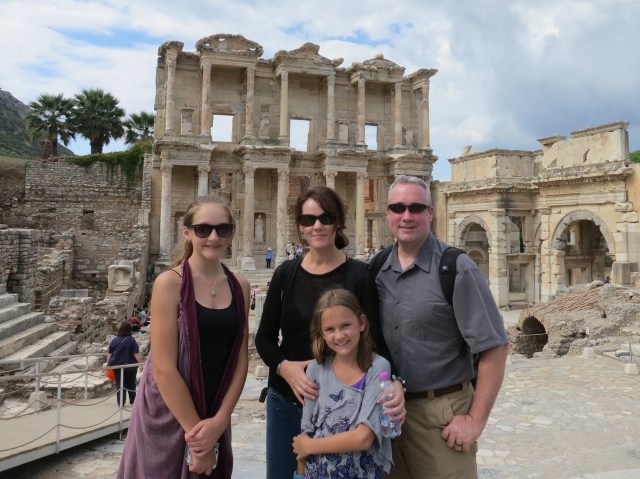
The Library of Celsus, Ephesus’s most famous monument, was built to store 12,000 scrolls and serve as a mausoleum for Celsus. The library was three-stories high, but a series of devastating earthquakes destroyed it. The two-story facade was rebuilt by archiologists between the years of 1970 and 1978.

des

The Great Theater, used by St Paul to teach Christianity, had enough seating for 25,000 worshippers.

desc

The girls taking a much needed break after a long day of walking through ancient ruins.

An artist's rendition of the Temple of Artemis. This picture is from Wikimedia Commons. User:Faigl.Iadislav

An artist’s rendition of the Temple of Artemis, one of the Seven Wonders of the Ancient World. This picture was copied from Wikimedia Commons. User:Faigl.Iadislav
Temple

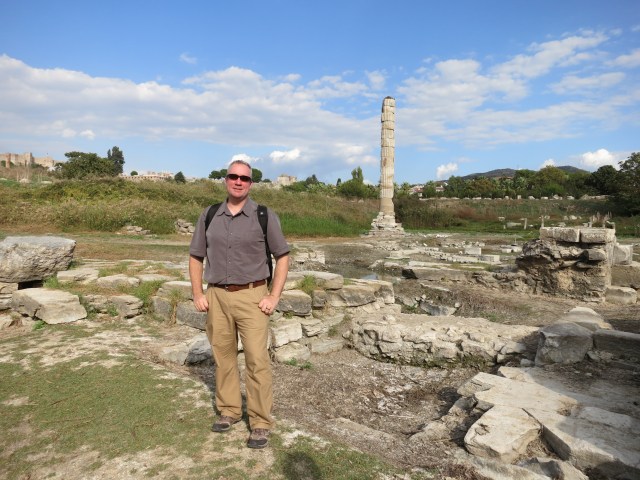
Marked by a single column, this is all that remains of the Temple of Artemis. Chris was standing by himself in this picture because the girls were off looking at something MUCH MORE important…

de

Turtles! That’s right, instead of looking at the Temple of Artemis, they were looking at turtles! This stagnant, sludge-filled pond was filled with hundreds of turtles sunning themselves on hot rocks and bobbing up for air!

Santorini, Greece
Santorini, the jewel of the Aegean Sea, is a vestige of one of history’s biggest volcanic eruptions. Jutting up from the azure-colored ocean, the caldera’s white-washed houses and blue-domed churches sit prominently along its dramatic sheer cliffs. In a rare moment of peace and quiet, the raw beauty of Santorini is unconditionally breathtaking.

d

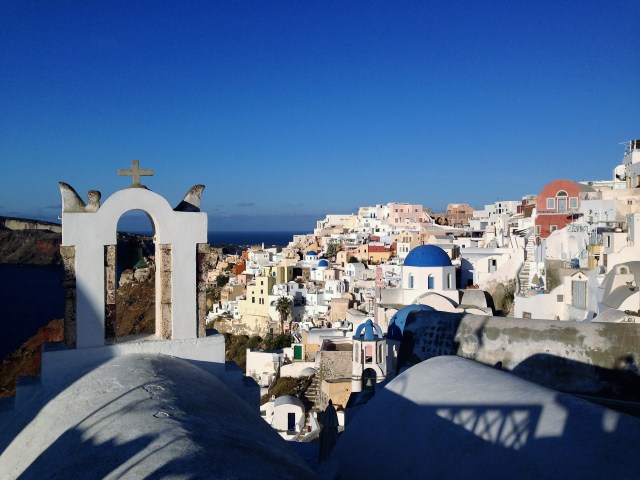
Oia (pronounced EE-ah), is Santorini’s most recognized village.  The “picture perfect town” is often overcrowded with tourists, especially when a handful of cruise ships arrive.
de

The houses are painted white for aesthetic reasons, but they were also painted white during the Ottoman period, when homeowners acted in defiance for not being allowed to fly their white flags.
de

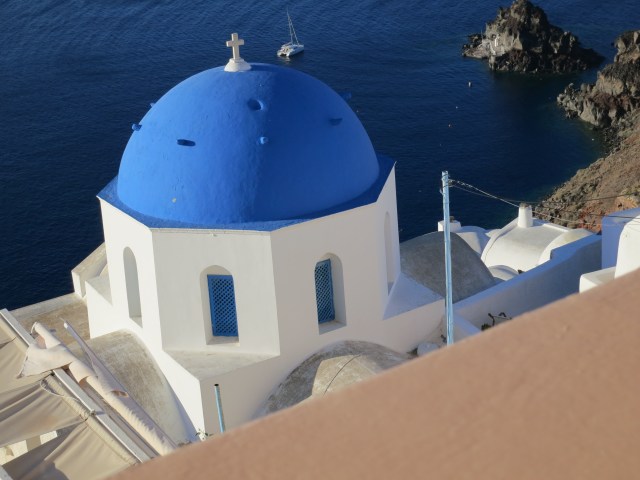
Santorini’s most photographed church.

d

Another one of the village’s white-washed, blue-domed churches.

m

Staying two steps ahead of the cruise ship mobs, we quickly snapped the pictures above and then ducked into an empty coffee shop for cappuccinos, hot chocolate, and baklava. The coffee shop offers one of the most stunning views of the Mediterranean.

Olympia, Greece
Olympia is the birthplace of the ancient Olympic games. The Sanctuary of Olympia was created during the Archaic period to establish a site to worship the supreme god, Zeus, and to give athletes a place to participate in competitive events. The first Olympiad was held in 776BC. The site continued to expand and develop during the Classical, Hellenistic, and Roman periods, but, by the 7th century, it was completely abandoned due to devastating earthquakes and torrential floods. Today, these remains are one of Greece’s greatest treasures.

de

The ruins of The Philippeion of Olympia.
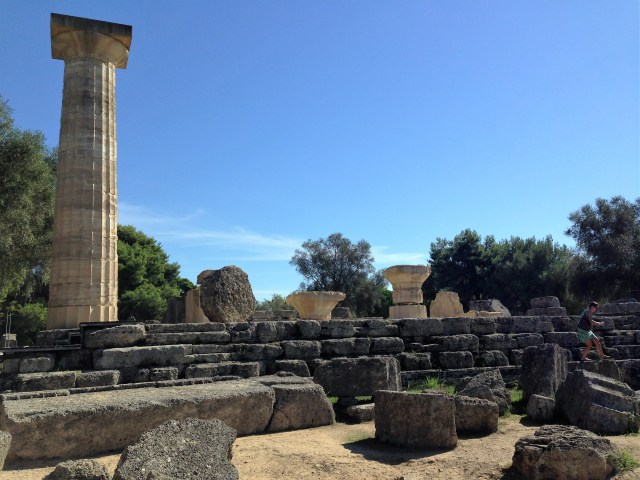
Ruins of the Temple of Zeus.

The ruins of the Temple of Zeus.

de

Foundations and pieces of fallen columns are scattered throughout the site.
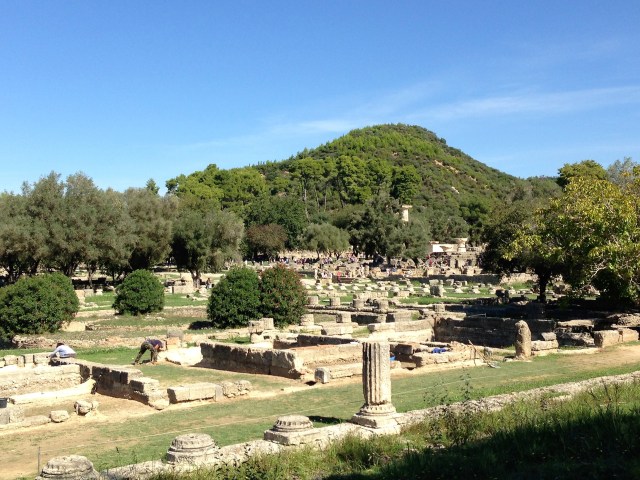
d

It’s hard to capture the true beauty of Olympia in photographs.
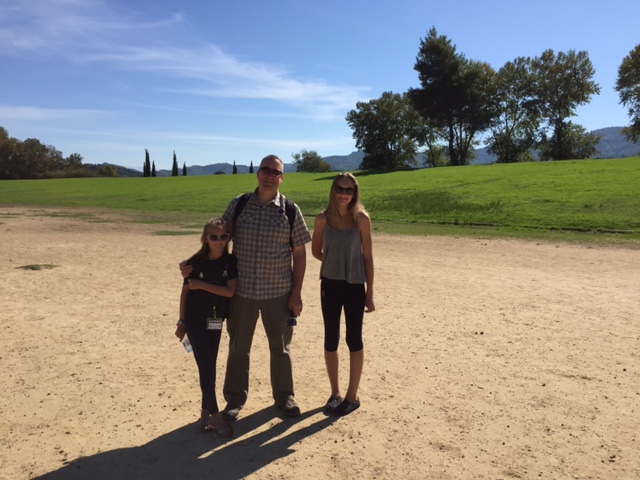
chariot

Chris and the girls standing in the middle of the Stadium. It was considered the holy place for the ancient Greeks, and it was the location where many of the sporting events took place.

de

The girls crouching down and preparing for a race at the Stadium’s starting block.

Dolomites, Italy
One of the best parts of our vacation was a completely unplanned and unexpected excursion to the southern Alps. Chris made a comment to our taxi driver about being able to see the mountains from the ship while it was returning to Venice, and within minutes, the taxi driver had a day-trip planned for us. It included a tour of Cortina d’Ampezzo (a small village in the foothills of the Dolomites), lunch at a local farm house, and a drive through the region’s villages and vineyards. It was a perfect end to a perfect vacation.
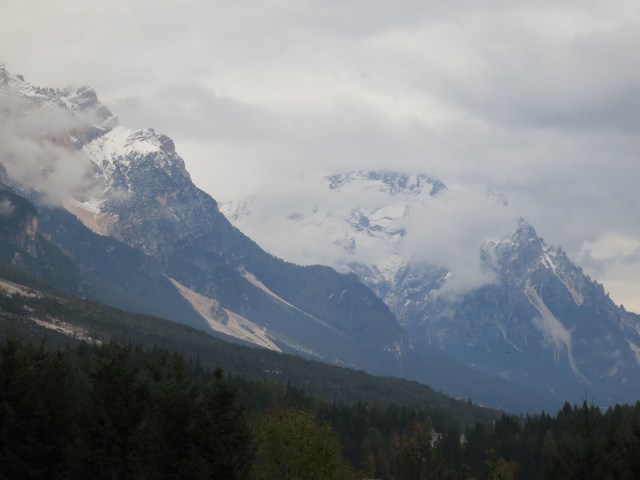
d

The Alps is the highest and most extensive mountain range in Europe.  It stretches across seven alpine countries, including Italy. Italy’s Dolomiti, more commonly knowns as the Dolomites, are famous for winter skiing and summer hiking, mountain biking, mountain climbing, and base jumping.

d

Cortina d’Ampezzo is a quaint village in the heart of the southern Alps. The spectacular Dolomites magestically frames the town with stunning views from every angle.
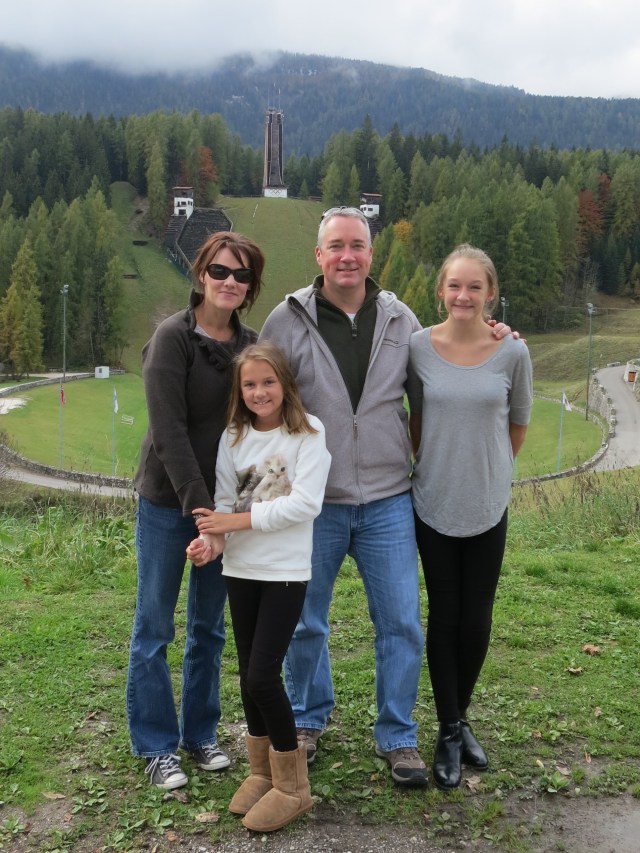
d

Cortina was scheduled to host the 1944 Winter Olympics, but it had to be cancelled because of World War II. The town ended up hosting the 1956 Winter Olympics. Even though the ski jump is no longer used, it remains standing as a historical reminder of the Olympics.

v

The center of Cortina d’Ampezzo. We arrived just in time to enjoy the fall colors!

n

Chris was in heaven when our tour guide drove through Europe’s biggest larch forest, which happens to be in Cortina. European larches (his absolute favorite tree) are decidious coniferous trees that turn yellow every fall.

as

We ate lunch at a working farm, El Brite de Larieto, where a local family breeds cows, pigs, and goats to make homemade cheeses, cured meats, fresh meats, and fresh ice cream for their restaurant. The restaurant looks closed, but every table was completely filled during the day’s limited serving time.
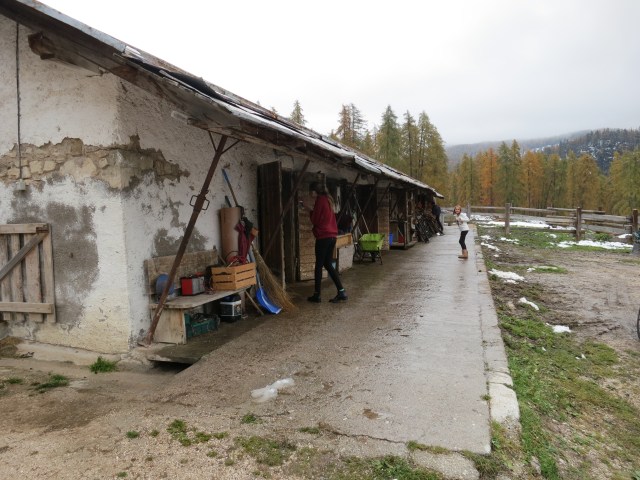
d

The girls took a peek inside the stables to see the cows and goats that helped make the cheese and ice cream that they just ate.
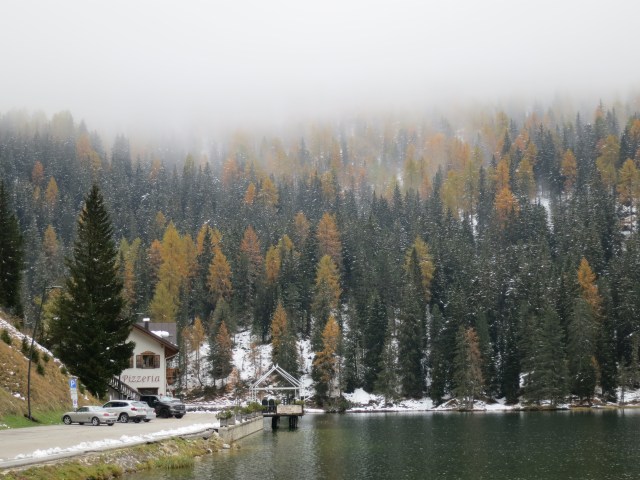
d

After lunch, we drove to Lake Misurina to see its beauty and experience its crisp air. Many Italians believe that the lake’s unusual climate and fresh air helps treat asthma.
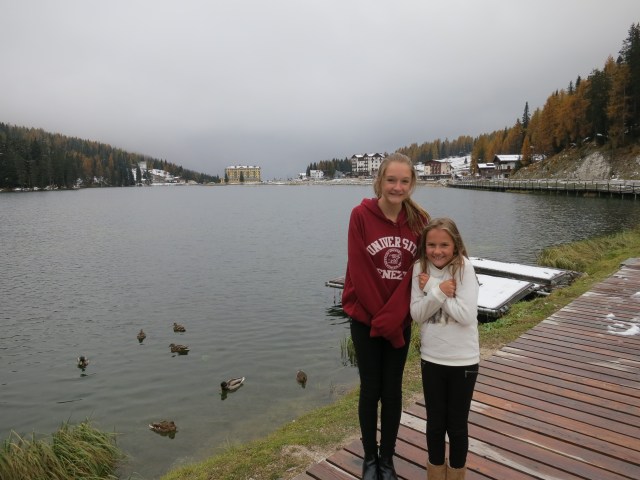
d

It was freezing cold, as you can see by Kylee’s posture, but the girls loved it! This is the first time that they have felt this cold and touched snow in more than five years.
Posted in Ally Rose, Kylee Rose, Vacation | Tagged , , , , , , , , , , , , , , , , , , , , , , , , , , , , | 8 Comments

Psych!

The scope of our Indonesian adventure moves in a dynamic state of flux, and it never fails to surprise us. My last post alluded to the fact that we boarded the plane and arrived in Timika, but that didn’t happen. An hour after I posted it, we boarded the plane, took off, and, after two hours of flight time, we turned around and flew back to Makassar.

The adventure didn’t stop there. We waited in front of the airport for more than ninety-minutes before a shuttle arrived to transport us to a hotel. We were expecting a direct route to the hotel, but the driver made a quick stop at a dilapidated side-street shop and made some kind of clandestine transaction before continuing on to the hotel. Once we arrived at the hotel (with no luggage) we spent an hour checking in and another hour chasing down extra bedding and toothbrushes before crashing in our beds.

Early the next morning, we were shuttled back to the airport for a second attempt. We waited for five-hours just to see if the air quality conditions would improve, and once it looked like it was worth a shot, we boarded the plane and flew towards Timika. There was no guarantee that we would land. In fact, we were warned that there was a high likelihood that we would return to Makassar with a quick stop in Biak to refuel. Two-and-a-half hours later, we were on the ground…..in Timika!

The impact that the wildfires have had on travel in and out of jobsite is shocking. The Timika airport has been closed for more than two weeks, stranding up to 2,000 employees and more than one hundred wives and children. The day that we returned to Timika, three company airplanes, filled to capacity, landed from Makassar, delivering approximately 400 employees, 3 wives, and 4 children back to jobsite.

Much needed and wanted rain returned Saturday, settling the fires in the rainforest and clearing the smoke in the air. As a result, the Timika airport is now fully functional and operational, and the company’s difficult task and diligent effort of returning everyone back to jobsite will be completed by Friday.

Everyone has their own unique experience and story to tell. My friend, Robin, wrote about her and her son’s experience trying to leave jobsite on her blog. Click on this link, So You Think Leaving is Easy?, to read her story.

Ally and Kylee, physically tired and emotionally exhausted from the chaos in Makassar. In this picture, they are grabbing a few weeks on the floor of the Makassar airport while waiting for the shuttle to pick us up.

Ally and Kylee, physically tired and emotionally exhausted from the chaos in Makassar. In this picture, they are grabbing a few winks on the floor of the Makassar airport while waiting for the shuttle to pick us up.

The large crowd of Freepoert employees (and a few family members) waiting to leave Makassar. Gate 6 will always be the most memorable airport gate of our time in Indonesia!

A large crowd of Freeport employees waiting to leave Makassar. Gate 6 will be the most memorable airport gate during our travels through Indonesia!

Posted in Ally Rose, Kylee Rose, Uncategorized | Tagged , , , , , , , , , | 2 Comments

100 Things to Do and See in Makasaar

We woke up early yesterday morning and went to Denpassar’s (Bali) Ngurah Rai Airport with return tickets to Timika. After a typical airport delay, we boarded the plane and began our journey home. After 55-minutes of flight time, our high hopes and wishful plans of returning to jobsite were abruptly aborted when we landed in Makasaar, and found ourselves (with 100 other people from jobsite) being carted off to a hotel. The poor air quality in Timika (due to the fires) made it impossible for the plane to safely land, so it was rerouted to Sulawesi, an island northeast of Bali.

Ironically, this happens to be my 100th post. So, in recognition of it, and, in the event you ever find yourself in Makasaar, I have prepared a list of 100 things to do and see here.

The City of Makassar

The City of Makasaar from our hotel window.

100 Things to Do and See in Makasaar
1. See the Great Mosque
2. Run your fingers through Parangloe Waterfall
3. Sing a song at a karaoke bar
4. Eat pisang epe (pressed grilled banana, served with melted brown sugar)
5. Tour a tea planation
6. Shop for jewelry
7. Research the island’s Dutch history
8. Eat coto Makasaar (a stew made of beef, innards, nuts, and spices)
9. Listen to the call of prayer (done 5 times a day)
10. Get a cheap massage
11. Explore Chinatown
12. Enjoy a ride in a roda tiga
13. See the city from the top floor of the Aston
14. Hold and pet a rooster
15. Learn about the elaborate funeral customs of the Toraja people
16. Watch a Hollywood movie with Indonesian subtitles
17. Get wet at Bugis Waterpark
18. Join the locals in one of their favorite past-times, people watching
19. Visit Trans Studio (the third largest indoor theme park in the world)
20. Record butterfly sightings
21. Buy “oleh-oleh” (small gifts) for friends
22. Swim
23. Snorkel
24. Dive
25. Spot turtles and shark
26. Tour the city in a taxi
27. Try eating bat and/or rat
28. Witness a bloody sacrifice of a buffalo, goat, or pig
29. Trek through the Sulawesi mountains
30. Take a multi-day tour
31. Visit a museum
32. Drink bubble tea
33. Admire stalactites and stalagmites in the Cave of Dreams
34. Watch ships berth at Paotere Harbor
35. Snack on pisang goreng (fried banana) at Central Market
36. Read a book about Makasaar’s sea gypsys
37. Go to Fort Rotterdam to see Dutch architecture
38. Visit a native village
39. Walk through the fish market
40. Buy a bottled drink from a road vendor
41. Watch the sunrise on a beach
42. Watch the sunset on a beach
43. Practice Bahasa Indonesia
44. Challenge your heat tolerance with the regional food (described as being exceptionally fiery and bold)
45. See the remains of a 9,500 kg cannon from the Gowa-Tallo Kingdom era
46. Walk along Losari Beach
47. Try on and buy silk scarves
48. Watch airplanes cross the sky
49. Join a hash run
50. Eat fried chicken with a side of rice at KFC
51. Get lost in the city
52. Enjoy a cappuccino at Starbucks Makasaar
53. Take a nap
54. Buy a souvenir
55. Touch the Floating Temple
56. Cool off with a fan purchased from a beach vendor
57. Eat fresh grilled fish and prawns at a seaside restaurant
58. Swim in the hotel pool
59. Explore the local markets
60. Interact with the local people
61. Visit Xian Ma Temple
62. Watch the local news
63. Let a local take your picture (they think Americans are like movie stars)
64. Have a picnic in the mountains
65. Run through a rice field
66. Look at the city on Google Map
67. Be entertained by a medicine man and/or a snake charmer
68. Watch the chaos of cars and motorcycles moving around the city streets
69. Eat chocolate (Makasaar is the third largest cocoa producer in the world)
70. Play games at one of the city’s many arcades
71. Take photographs of the unique mountains
72. See a cuscus (a tree-dwelling marsupial) at the zoo
73. Eat nasi kunig (flavored yellow rice)
74. Weave through the chaotic streets to reach the other side
75. Rent a motorcycle and see the city on you own
76. Try a piece of durian from a local market
78. Take advantage of the fast internet connection
79. Eat a Big Mac with a side of rice at McDonalds
80. Go to a sport’s game
81. Put your foot in the Celebes Sea
82. Eat a Whopper with a side of rice at Burger King
83. Look at the city lights
84. Take porta-potty ambush photos (a Rose family tradition)
85. Check out the hotel’s gift store
86. Buy a Makasaar T-Shirt
87. Check the earthquake status for Makasaar
88. Visit the Graveyard of King Tallo
89. Visit the Graveyard of Prince Diponegoro
90. Wander around Losari Beach’s boardwalk
91. Visit Museum Balla Lompoa, and dress up in royal Gowanese costumes
92. Explore the small islands that make up the Spermonde Archipelago
93. Take photos of cave paintings in Leang-Leang
94. Buy a glazed Dunkin’ Donut at the airport
95. Spend money in western boutiques
96. Watch and listen to K-Pop on MTV Asia
97. Buy gigantic bottles and jugs of passion fruit juice
98. Admire women dressed in beautiful sarongs and kebayas
99. Take a boat ride to a neighboring island.
100. Smile at the local children (they love it!)

We are back at the Makasaar airport, waiting at Gate 6 for our plane to arrive. During the short 18-hours that we spent in Makasaar, we accomplished 13 of the 100 things on the list (numbers 9, 48, 53, 54, 63, 66, 68, 83, 86, 87, 94, 98, and 100). In our case, I think it’s okay to add more more thing to the list.

101. Get the hell out of Makasaar!

Posted in Vacation | Tagged , , , , , , , , , , | Leave a comment

Stuck in Bali

El Niño is still up to his old tricks, and more. His relentless force continues to cause unfavorable conditions in the region and ignite a new host of problems, including wildfires throughout the island of New Guinea. The wildfires are becoming increasingly fierce in Papua, causing the cancellation of flights in and out of the Timika airport, damaging air quality for the local population (which has triggered a serious public health problem for them), and sending pollution into the Pacific.

We were supposed to return to jobsite early this morning from vacation, but the Timika Airport is nonoperational due to poor visibility from smoke. The airport can only operate when the pilot’s visibility is at or above 1.6km, which can change daily. As of now, we are scheduled to fly out early Friday morning, but air quality conditions need to improve for that to happen.

News articles are asserting that the wildfires were started by Papuan tribes when they tried clearing their land for hunting and/or for making it more fertile for planting. It is customary for the people to engage in this type of slash and burn gardening, but, during the unusual El Niño season, the fires got out of control and quickly spread. According to the Jakarta Post, “around 300 military personnel [were recently] deployed to put out fires in several areas, especially in Merauke and Mappi regencies.”

The timing of the fires couldn’t have been worse. Many families from jobsite are in the process of returning from October break, leaving them stranded in Bali or Cairns, Australia. When we return to jobsite, severe water restrictions have been reimplemented, leaving us with limited water usage. So, as of now, we are stuck in Bali…sitting by the pool, enjoying tropical drinks, and doing the rain dance.

This natural-color satellite image was collected by the Moderate Resolution Imaging Spectroradiometer (MODIS) aboard the Aqua satellite on September 24, 2015. Actively burning areas, detected by MODIS's thermal bands, are outlined in red and there is significant smoke rising from these areas and blowing northwest.  NASA image courtesy Jeff Schmaltz, MODIS Rapid Response Team. Caption: NASA/Goddard, Lynn Jenner

This natural-color satellite image was collected by the Moderate Resolution Imaging Spectroradiometer (MODIS) aboard the Aqua satellite on September 24, 2015. Actively burning areas, detected by MODIS’s thermal bands, are outlined in red and there is significant smoke rising from these areas and blowing northwest. NASA image courtesy Jeff Schmaltz, MODIS Rapid Response Team. Caption: NASA/Goddard, Lynn Jenner

Posted in Uncategorized | Tagged , , , , , | Leave a comment

We’re on Vacation!

Sorry-out-to-live-be-back-soon

I’ll be back in two weeks to post more pictures and stories of our family’s adventures in Indonesia (and beyond)!

Posted in Vacation | Tagged , , , , | Leave a comment

Mill and Mario Brothers’ Mining

Last week MZS’s fourth-grade and fifth-grade students left the familiar confines of their classrooms and journeyed into the mysterious territory of their fathers’ workplace. They traveled beyond the roads they knew, passed by buildings they had never seen, and went through security check points they have never crossed to experience the mammoth undertakings of PTFI’s mining and milling operations. Equipped with hard hats, safety glasses, earplugs, and steel-toed boots, the group of students saw, for the first time, the specialized mechanics of metal processing.

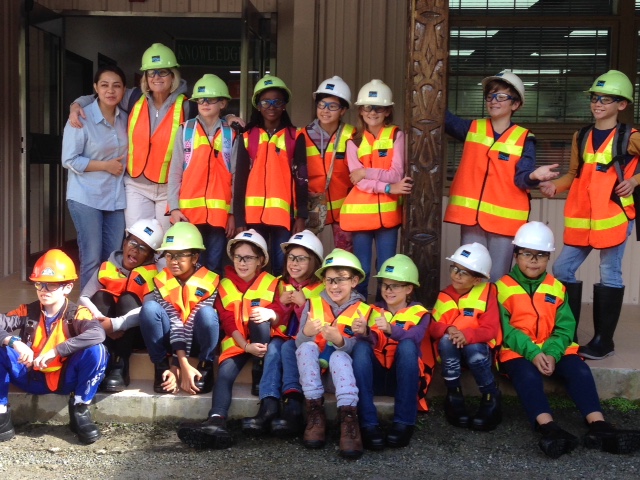
Kylee (standing against the wooden pillar) and her peers taking a group photo before leaving the school.

Kylee (leaning against the wooden pillar) with her peers and teachers taking a group photo before leaving on their field trip.

PTFI’s open pit and underground mines extract about 200,000 tons of ore every day. Like a colony of ants, a constant flow of haul trucks transport extracted ore to massive crushers, which break the boulders into smaller rocks and drop them onto a system of gigantic conveyors, which carry them to the mill where they are ground into fine mud. The mud is blended with chemicals to separate the copper, gold, and silver from the worthless rock (tailing). The concentrated ore, containing the metals, is piped as a slurry from the mill to a dewatering plant in the lowlands using a 110km long pipeline. After it is dewatered, the final product is shipped to smelters in Indonesia and around the world where it is then purified and poured into copper plates.

The Mill

The students watching the mill.

The students watching John Wilmot, Milling Guru, explain a Semi-Autogenous Grinding Mill (“SAG Mill”), which uses large steel balls in a machine like a humongous tumble dryer to grind the crushed ore into small pebbles and mud. Photo courtesy of Kylee Rose.

??

Ball Mills, similar to the SAG Mill, process crushed ore into mud. Photo courtesy of Kylee Rose.

??

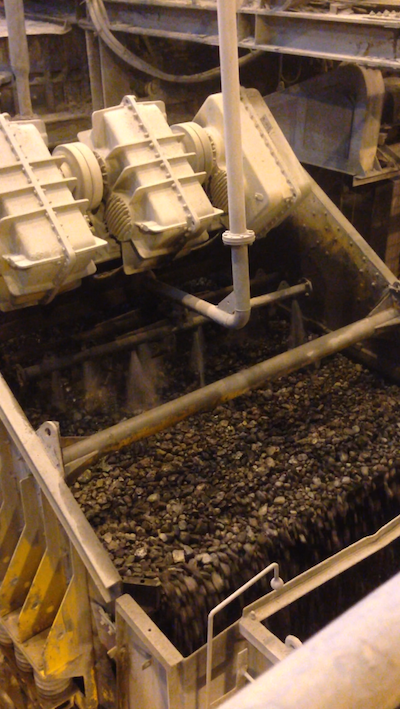
Wet screens that wash the ore mud from the ore pebbles.  The mud passes through the screen and moves to the metal extraction stage; the pebbles get conveyed back to the ball mills for another cycle. Photo courtesy of Kylee Rose.

ffy

The ore mud is mixed with chemicals that stick to metal-sulfur minerals, and detergent chemicals that make a froth.  The valuable metals bubble up like shiny copper-colored root beer foam, which gets skimmed off.  The other 99% sinks to the bottom and gets flushed away as tailing.  In this photo, Kylee grabs a handful of the good stuff. Photo courtesy of Kylee Rose.

Minegem

??

The first guys to pull the ore out of the mountain in PTFI’s underground mines have always had one of the most hazardous jobs.  As a result, PTFI now extracts most of its ore through semi-automated mining machines that are run from several kilometers away on the surface.  When the system is running smoothly, one operator can run several loaders at once from a clean, comfortable, and safe office building (the same building as Chris’s office).  Kylee tried her hand at it during the tour. Photo courtesy of Kylee’s friend, Tara.


??

Maybe her time playing “Mario Kart” on the Wii will prepare her for a future job!  Modern mines are becoming more like a video game than manual labor. Photo courtesy of Kylee’s friend, Tara.

Posted in MZIS | Tagged , , , , , , , , , | 2 Comments

The Little Boy in the Rainforest

El Niño, planet earth’s mischievous “little boy,” meddled in Indonesia’s weather patterns this winter with all his might. His antics resulted in warmer temperatures and drier conditions throughout the region. In Tembagapura, his formidable presence was often felt when typical wet afternoons and evenings turned into long runs of rainless days and rainless nights. The most severe months were June, July, and the first couple of weeks of August, when Tembagapura looked and felt like a dustbowl.

Without rain, the surrounding waterfalls turned into bare rock, and the rivers turned into exposed riverbeds, both of which threatened the town’s and mine’s water supply. As a result, necessary water restrictions were implemented. For weeks at a time, the water was turned off between the hours of 10:00AM and 4:00PM, and, again, between 10:00PM and 4:00AM. Although, it wasn’t unusual to see those restrictions extended well after 4:00PM and well before 10:00PM.

El Niño continues to create warm and dry conditions in Tembagapura. Fortunately, he is beginning to exercise some mercy by sending us intermittent rain showers to refill the parched water supply systems. There is nothing more uplifting than the sound of beating rain against the rainforest floor; signifying a short reprieve from our neighborhood’s ongoing water restrictions.

This river is a primary source of water for jobsite (including the town, the mill, and the mines). In this picture (taken two weeks ago), it looks like a trickling stream.

This river is a primary source of water for jobsite, including the town, the mill, and the mines. In this picture (taken two weeks ago) it’s nothing more than a trickling stream.

Posted in Tembagapura | Tagged , , , , , | Leave a comment

The Great Barrier Reef

The Great Barrier Reef is a mere hop, skip, and jump from jobsite, so it was only a matter of time before we found ourselves enjoying its illustrious scenery. Considered one of the seven wonders of the natural world, its vast collection of reef systems, coral cays, and tropical islands encompasses an extensive 2,300km long ecosystem along the Queensland coastline. Near or far, it’s a destination worth seeing and exploring.

Port Douglas, a small coastal town situated 70-km from Cairns, is regarded as the most popular base from which to explore the northern part of the reef. In addition to a wide array of water activities (including scuba diving, snorkeling, sailing, and turtle spotting) it’s an ideal place to escape and unwind. We spent four days in Port Douglas enjoying its charming shopping district, snorkeling around and above Agincourt Reef, and walking through Daintree National Park.

Before heading back to jobsite, we spent three days in Cairns doing what we do best there – grocery shopping! Bags of brown sugar and chocolate chips topped the list. Closely followed by several packages of whole bean coffee, a handful of spice jars, and a few boxes of Kraft Easy Mac. Just enough to fill the Australian expat’s customary packing implement – a banana box.

Port Douglas

Port Douglas

A view of the Coral Sea from Port Douglas.

Chris and the girls

Chris and the girls enjoying the views from the Port Douglas Marina.

Great Barrier Reef Catamaran Excursion

Ally

We took an all-day catamaran tour on the Poseidon to snorkel around the Great Barrier Reef. Ally popped her head up just in time to have her picture taken with the catamaran in the background.

Agincourt Reef

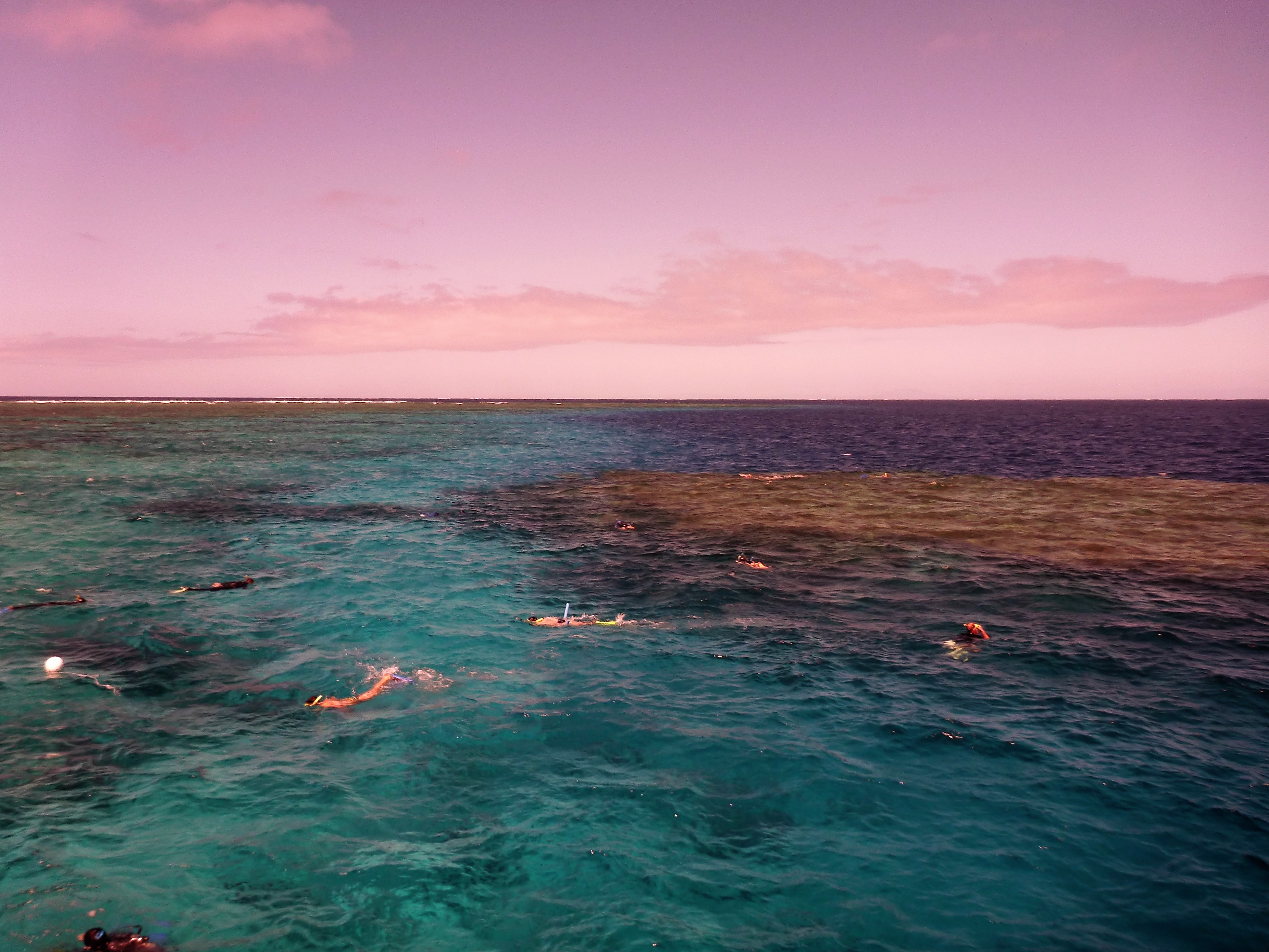
Snorkelers swimming around Agincourt Reef. The reef sits on the very edge of the Great Barrier Reef. It’s described as a ribbon reef that runs parallel to the Continental Shelf. It’s home to large schools of fish, tiny iridescent fish that find shelter in the coral, giant clams that can weigh as much as 440 pounds, and harmless reef sharks that make surprise appearances. A reef shark showed up during our second snorkeling stop. We weren’t lucky enough to see it, but the chatter between those who saw it was exciting. Chris and Ally are somewhere in the water hoping to get a glimpse of the shark.

Kylee above the spire

Kylee (wearing a full jellyfish bodysuit) snorkeling above a coral spire.

Reef

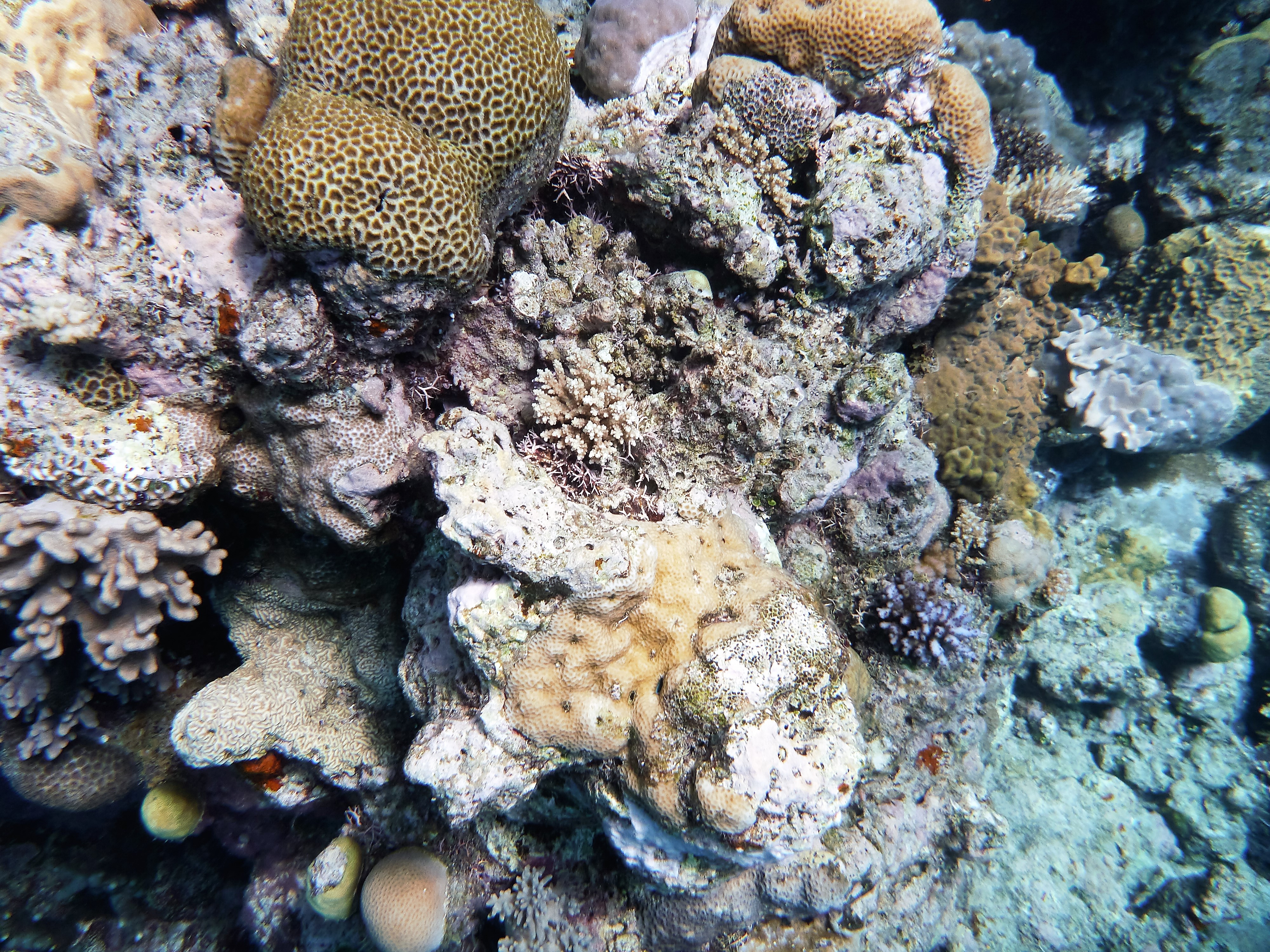
A closeup of the reef.

Reef

Another closeup of the reef.

Reef

A small school of fish swimming above the reef.

Daintree National Park – Mossman Gorge

Mossman Gorge

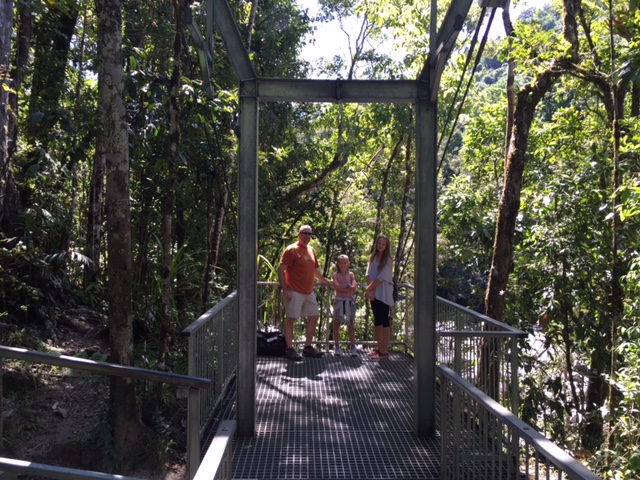
Mossman Gorge is a short drive from Port Douglas in the Daintree National Park. Owned by the Kuku Yalanji people, it is described as a spiritual place that offers a small glimpse of an ancient landscape. This is a picture of Chris and the girls standing at an overlook near Mosssman River.

Mossman

Ally cooling her feet in the crystal clear waters of Rex Creek.

Mossman

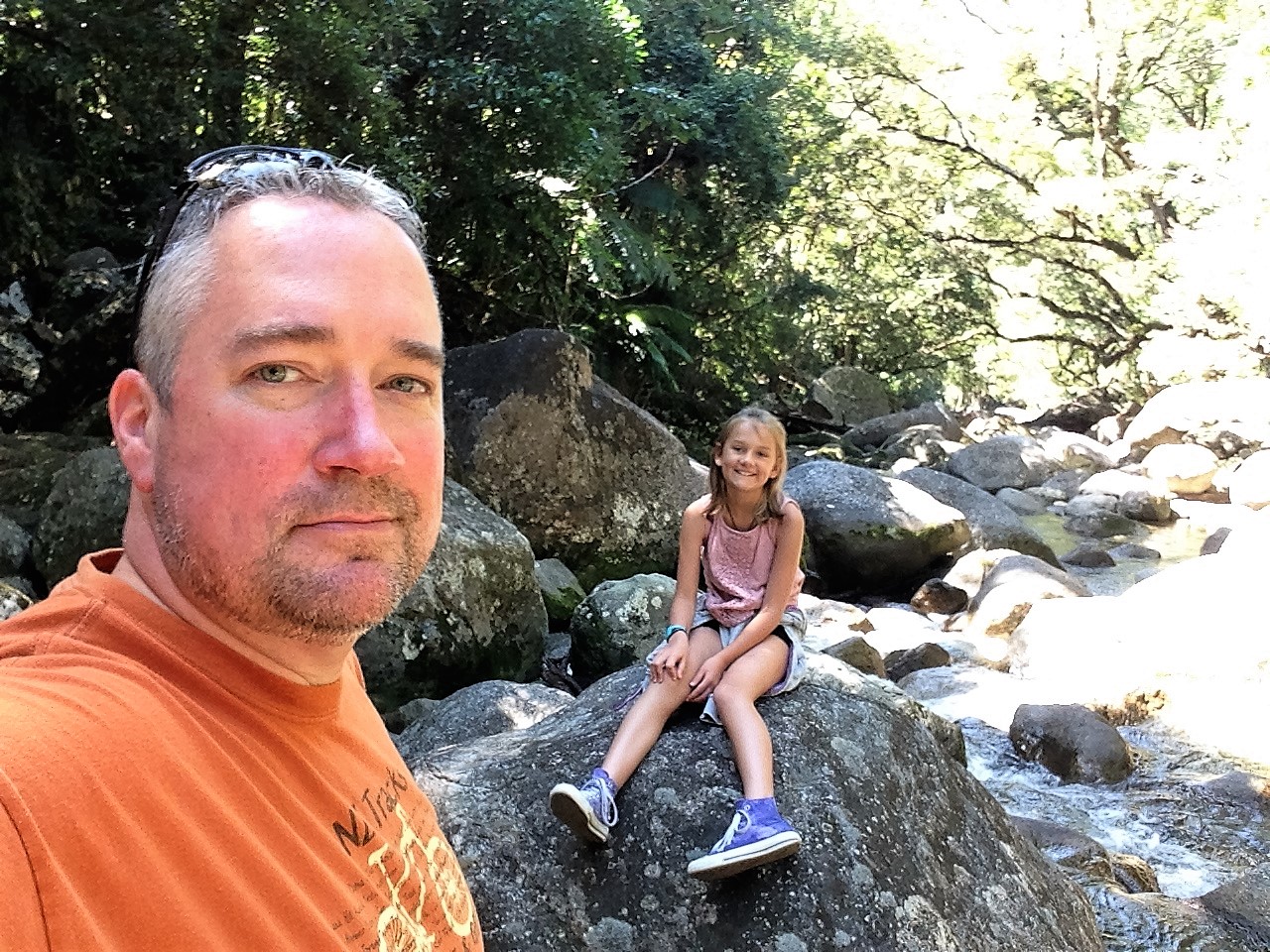
Chris and Kylee taking a short break on massive granite boulders that line Rex Creek.

Mossman

The girls surrounded by the trunk of an old Morton Bay fig tree.

Lunch in

A final picture before leaving Port Douglas.

Cairns

Zoom

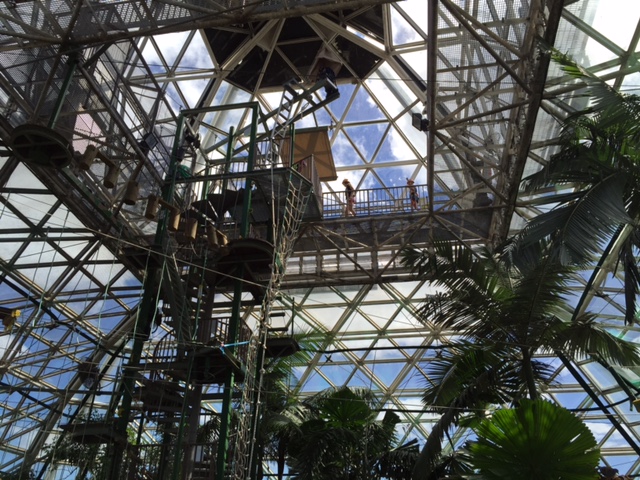
The highlight of our time in Cairns was going to Cairn’s ZOOm and Wildlife Center, a challenging ropes course set in an indoor wildlife habitat.  Its continuous belay system guides participants through a course with three zip-lines,  a dome climb, and a 13m high rapid descent tower jump. In this picture, the girls are gearing up in helmets and harnesses before setting out on the course.

Zoom

Ally and Kylee walking through a part of the mid-zone course that required them to cross swaying planks and traverse hanging nets.

Zoom

The girls navigating the high-zone course. Ally is on the log course at the top and Kylee is on the log course below her. The two girls on the top right are preparing to go down the rapid decent tower.

Zoom zipline

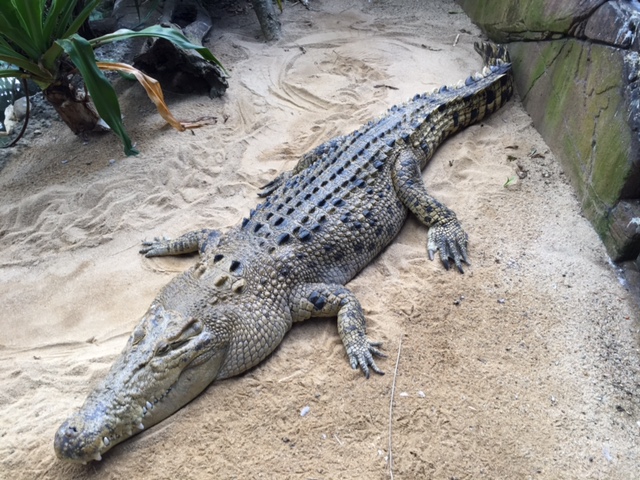
Kylee riding a zipline that had her dangling over Goliath, a four meter long salt water crocodile. Goliath’s tail is the jagged brown object in the tan colored sand. If you continue looking to the left, you will see the main part of his body.

Goliath

This is a close-up of Goliath, the famous resident crocodile. He was rescued from the Cairns Crocodile Farm (which is now owned by Louis Vuitton) in November of 2003.

Ally and Kylee walking towards the drop. To watch a video of them, visit our sister site, 4693milesfromhomethe

Ally and Kylee walking towards the rapid descent tower.

Posted in Ally Rose, Kylee Rose, Vacation | Tagged , , , , , , , , , | 8 Comments

We’re on Vacation!

Sorry-out-to-live-be-back-soon

I’ll be back in one week to post more pictures and stories of our family’s adventures in Indonesia (and beyond)!

Posted in Uncategorized | Tagged , , | Leave a comment

M7.0 Earthquake

Indonesia sits on the Pacific “Ring of Fire” where tectonic plates collide causing varying degrees of seismic and volcanic activity. In Tembagapura, it’s not unusual to feel small earthquakes and tremors. Earthquaketrack.com has already identified 2 earthquakes today, 3 earthquakes in the past 7 days, 4 earthquakes in the past month, and 131 earthquakes in the past year in Papua (with a magnitude of 1.5 and greater). Earlier this morning, at 6:41am, a M7.0 earthquake rocked Papua. The epicenter of the earthquake was in the interior of the province, below the Irian Jaya Mountain Range.

According to the Indonesian Agency for Meteorology, Climatology, and Geophysics, the earthquake reached a depth of 49km. It was felt all over the province, including Tembagapura. The earthquake woke the girls from their sleep and rattled the house for a good thirty-seconds. At this time, there are no reports of damage or injury.
All is well in Tembagapura!

Tembagapura is located in the same mountain range as the epicenter of the earthquake. Tembagaura is slightly west of the red dot. From Earthscope.com

Tembagapura is located in the Irian Jaya Mountain Range, about a half-inch west of the red star. Map from Earthscope.com

Posted in Tembagapura, Uncategorized | Tagged , , , , , | 1 Comment